
Even Protein Distribution Effects on 24-Hour Muscle Protein Synthesis
Distributing daily protein intake evenly across multiple meals produces a distinctly different temporal pattern of muscle protein synthesis compared to concentrated intake in fewer, larger meals. This article examines research findings on how even protein distribution affects whole-day synthesis rates and the mechanisms underlying these differences.
Research Methodology and Study Design
Investigations comparing even versus skewed protein distribution typically employ controlled feeding protocols where all meals are provided and analyzed for precise nutrient composition. Participants consume predetermined quantities of protein distributed across varying numbers of meals throughout the day. Muscle protein synthesis is measured through stable isotope tracer methodologies—isotopically labeled amino acids are administered, and the incorporation of these tracers into muscle proteins provides quantitative measures of synthesis rates.
These controlled designs enable researchers to isolate the independent effect of protein distribution while holding total daily protein intake constant. Any observed differences in MPS responses can therefore be attributed to distribution pattern rather than variations in total nutrient quantity.
Studies have examined multiple comparison frameworks: three small meals versus two larger meals, four moderate meals versus two large meals, and similar permutations. This variation in study designs permits assessment of whether specific meal frequencies produce superior results or whether relationships are more continuous.
The Temporal Pattern of Even Distribution
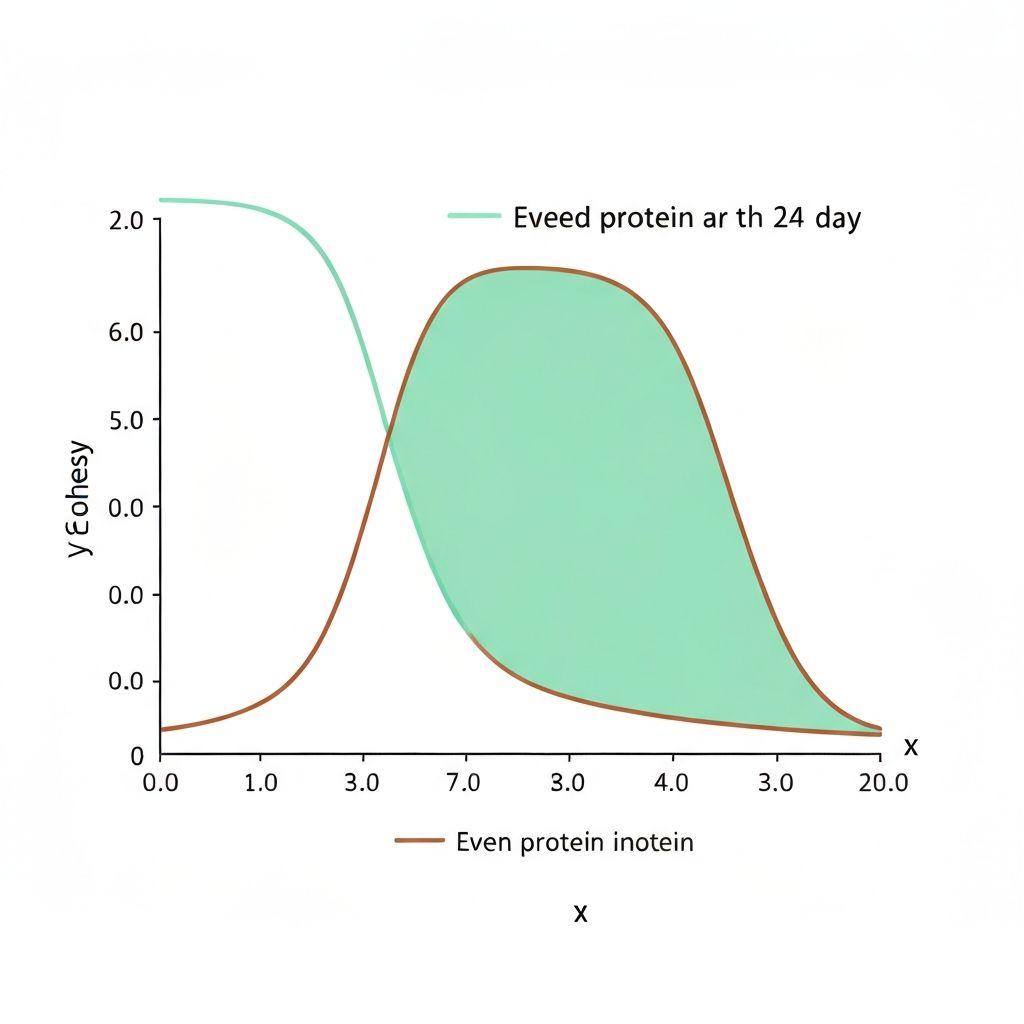
When protein is distributed evenly—for example, three meals each containing 25 grams of protein rather than two meals with 40 and 10 grams—muscle protein synthesis patterns change substantially. Each adequate-protein meal triggers an MPS response lasting approximately 60-90 minutes. With evenly distributed protein, multiple MPS peaks occur throughout the day, separated by intervals of lower baseline synthesis activity.
Sequential MPS Stimulation
With three adequately-spaced protein meals, the MPS response to the first meal begins declining as the stimulus from the second meal arrives, initiating a new synthesis elevation. This pattern produces a relatively undulating but consistently elevated MPS profile throughout the waking day. The cumulative effect represents sustained elevation of the synthetic machinery's activity—individual meal responses are smaller than with concentrated intake, but multiple peaks are achieved.
This temporal pattern contrasts sharply with concentrated protein intake, where fewer but larger synthesis peaks occur with substantial intervals of low baseline synthesis between meals. Researchers investigating whole-day patterns observe less integrated MPS area under the curve with concentrated distribution when meals are adequately spaced (4-5 hours apart).
Cumulative 24-Hour Synthesis Data
When research integrates MPS responses across 24 hours, findings reveal a more nuanced picture than might be expected from individual meal responses. Studies comparing three meals containing 25 grams protein each versus two meals containing 40 and 10 grams demonstrate that:
Young Adults (18-35 years)
In young, healthy populations, cumulative 24-hour MPS tends to be similar between even and skewed distribution patterns when total daily protein is equivalent. This suggests that while the temporal profile differs dramatically, the integrated synthesis response across the entire day reaches comparable totals. The number of synthesis peaks increases with even distribution, but the magnitude of each peak decreases proportionally.
Older Adults (65+ years)
In aging populations experiencing anabolic resistance, even protein distribution may produce somewhat higher cumulative MPS compared to skewed distribution at equivalent total protein intake. This age-dependent difference likely reflects the higher leucine threshold in older adults—multiple opportunities to reach the activation threshold throughout the day may partially compensate for reduced single-meal responsiveness.
These findings suggest that while distribution pattern profoundly affects the timing and sequencing of synthesis events, total daily MPS remains less dependent on distribution when protein is adequate. However, this generalization holds primarily for populations without mobility restrictions and for realistic meal spacings (4+ hours between meals).
Interactions with Physical Activity
The impact of protein distribution interacts substantially with physical activity patterns. In sedentary individuals, distribution differences produce more pronounced effects on MPS patterns. Physically active individuals consuming adequate protein show robust MPS responses to each meal regardless of distribution pattern, suggesting that mechanical muscle stimulation overrides or dominates distribution-related effects.
This interaction reflects the multi-factor regulation of MPS: both mechanical stimulus from muscle contraction and nutrient availability (particularly amino acids) independently activate MPS, and these signals combine synergistically. When mechanical stimulus is present (physically active state), protein distribution becomes a secondary consideration; the primary requirement is ensuring sufficient total daily protein. In sedentary states, distribution pattern may assume greater importance.
Protein Balance Beyond Synthesis
Understanding 24-hour protein balance requires considering not only synthesis but also protein breakdown (proteolysis). Even protein distribution may alter the time intervals when protein breakdown exceeds synthesis—periods of negative net protein balance—compared to skewed distribution.
Between meals, particularly in the fasting state, protein breakdown often exceeds synthesis, producing negative net balance. With frequent, smaller meals, these intervals are shorter and occur less frequently throughout the day. With concentrated protein intake and longer inter-meal intervals, extended periods of negative net balance may occur. This temporal difference could theoretically impact whole-day net protein retention despite equivalent total MPS.
Overnight Fasting Period
The overnight fasting interval represents the most extended period of typically negative net protein balance. Studies comparing evening meal composition find that higher protein intake in the evening meal moderates the magnitude of overnight protein loss. By extension, ensuring adequately-spaced meals including those in the evening reduces the duration of extended negative balance periods.
Practical Integration of Research Findings
The research on even protein distribution demonstrates several key concepts without prescribing a single optimal pattern:
Adequacy Matters Most
Ensuring each meal contains sufficient leucine (approximately 2.5-3 grams, typically achieved through 25-30 grams of quality protein) to trigger MPS appears more critical than the precise number of meals or total daily distribution pattern.
Temporal Pattern Varies by Individual Factors
Age, activity level, and health status modify the relative importance of distribution pattern. Younger, more active individuals may show less sensitivity to distribution variations. Older or sedentary individuals may benefit more from patterns ensuring adequate leucine in multiple meals throughout the day.
Research Limitations
Most controlled feeding studies examine acute metabolic responses to standardized distributions. Real-world patterns vary day to day based on schedule, food availability, and personal preferences. Whether short-term research findings translate to long-term advantages remains understudied for most populations.
Conclusion
Even protein distribution produces a characteristically different temporal pattern of muscle protein synthesis, with more frequent but smaller peaks in synthesis rate compared to concentrated intake. While this temporal difference is real and measurable through sophisticated research methodologies, cumulative 24-hour MPS remains comparable between distribution patterns in young adults when total daily protein is equivalent. In older adults, even distribution may provide modest advantages through multiple threshold-crossing opportunities. The practical significance of these distribution-based temporal differences in real-world settings remains incompletely characterized.
Educational content only. This article presents scientific explanations without offering individual recommendations or guarantees regarding personal outcomes.
Back to research articles